The Great Lakes Are Easier on Boats Than Saltwater, But They Are Not Gentle
The Great Lakes Are Easier on Boats Than Saltwater, But They Are Not Gentle
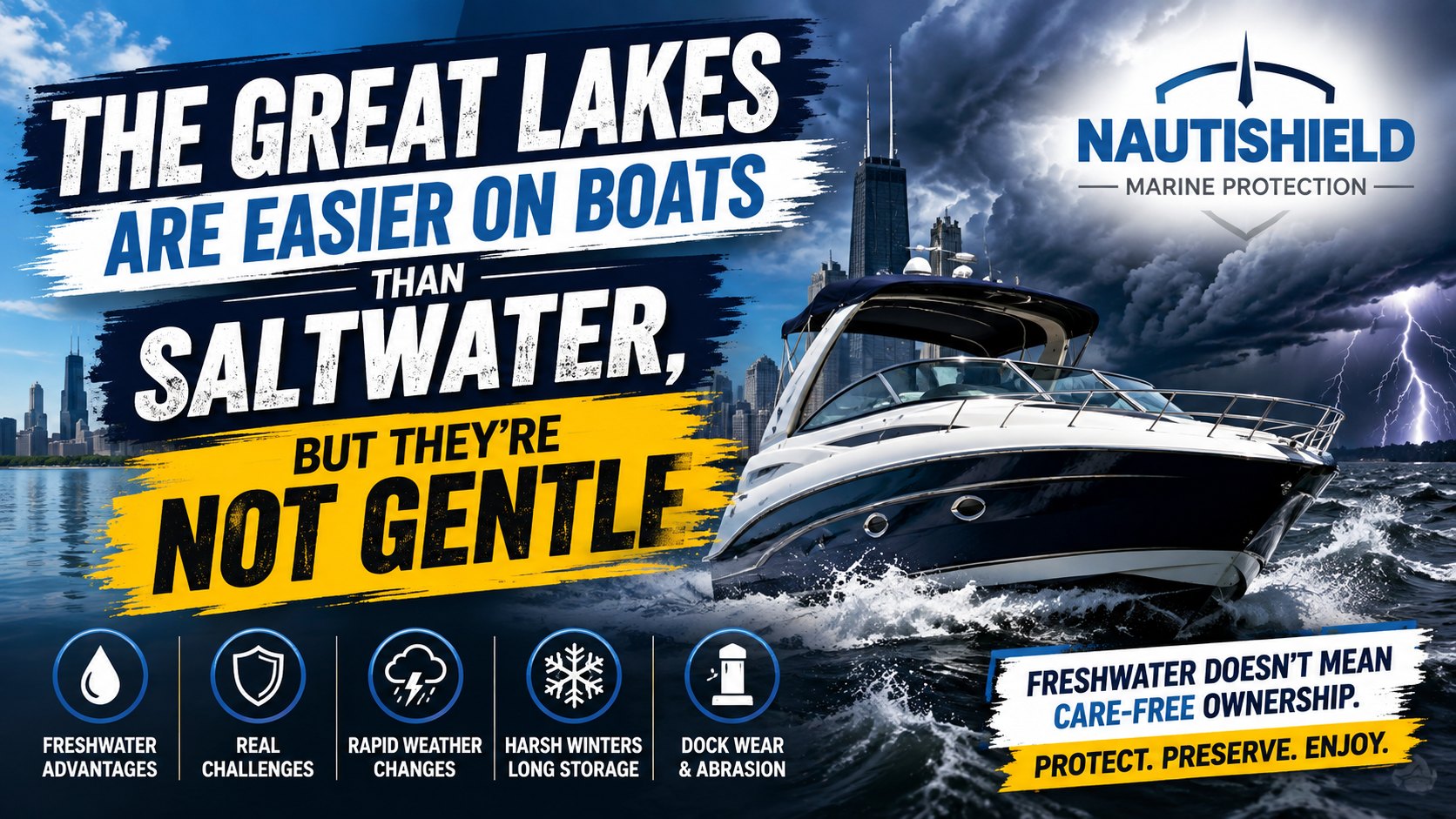
The Great Lakes Are Easier on Boats Than Saltwater, But They Are Not Gentle
Freshwater Gives Your Boat a Break, Just Not a Free Pass
There is a comforting assumption among Great Lakes boat owners that freshwater is simply easier on a vessel. In several important ways, that assumption is correct.
Saltwater is particularly aggressive toward metals because it accelerates galvanic corrosion. It also leaves salt deposits behind on gelcoat, glass, upholstery, canvas, fittings, and other exposed surfaces. Great Lakes boats avoid much of that constant punishment. Metal components generally face less aggressive corrosion, and owners do not have to fight a coating of salt after every day on the water.
But easier is not the same thing as easy.
Lake Michigan simply presents a different collection of problems. Mineral rich water can leave spotting behind. Summer sun works relentlessly on gelcoat, vinyl, canvas, and painted surfaces. Marina grime and bird droppings settle onto finishes. Fender contact and dock activity create physical wear. Then there are the conditions unique to Great Lakes ownership, including rapidly changing weather, steep waves, freezing temperatures, winter storage, and dramatic seasonal changes.
For owners of luxury boats and yachts, that distinction matters. A vessel can avoid the worst effects of saltwater and still accumulate years of visible deterioration if its surfaces are not properly maintained.
So the more useful question is not whether freshwater is easier.
It is this: What does proper protection actually look like for a luxury boat that spends its life on the Great Lakes?
Freshwater Really Is Easier on Your Boat
Freshwater deserves some credit.
Saltwater creates a particularly difficult environment for exposed metal. Outdrives, propellers, fittings, and other components face greater corrosion pressure when they spend their lives around salt. Freshwater significantly reduces that problem, which can make long term ownership easier on many of the materials throughout a vessel.
There is also no constant layer of salt crystals waiting to dry across the boat after an afternoon on the water. That means fewer salt related deposits on glass, gelcoat, upholstery, canvas, and painted surfaces. Routine cleaning can therefore be less demanding than it would be in a coastal environment.
Running gear and metal fittings can benefit from the environment as well. While they still require inspection and proper maintenance, they are not fighting the same aggressive salt exposure found along the coast.
Over years of ownership, those differences matter. Less corrosion can mean less deterioration of certain materials and fewer salt related maintenance concerns.
But freshwater does not place the boat inside a protective bubble.
Sunlight still reaches the gelcoat. Minerals still dry onto glass. Contamination still settles onto horizontal surfaces. Fenders still rub against finished panels. Winter still arrives.
The Great Lakes are easier on certain materials. They simply age boats differently.
No Salt Does Not Mean No Surface Damage
Walk through a Chicago marina late in the boating season and the evidence becomes fairly easy to spot.
Some boats still have deep, reflective finishes. Others have begun losing clarity. Glass carries stubborn spotting. Dark hulls reveal mineral deposits. Gelcoat starts looking chalky. Vinyl loses some of its richness. Metals become dull. Areas around docks and fenders collect scratches and abrasion.
None of that requires saltwater.
Freshwater mineral deposits can remain behind when water evaporates. Bird droppings and marina contamination can attack surfaces when allowed to sit. Ultraviolet exposure gradually contributes to fading and oxidation. Repeated dock contact adds another source of physical wear.
The problem is rarely one dramatic afternoon.
It is repetition.
A little contamination sits too long. A water spot is allowed to bake into a warm surface. Oxidation begins developing and goes unnoticed. A fender repeatedly contacts the same section of the hull.
Eventually, what could have been routine maintenance becomes correction or restoration.
Modern marine care is designed to interrupt that process. Instead of waiting for deterioration to become obvious, the goal is to clean, correct, and protect surfaces while they are still in good condition.
Water Spots Become a Different Kind of Enemy
Salt disappears from the equation on Lake Michigan, but minerals do not.
When freshwater dries naturally on a boat, mineral deposits can remain on the surface. The result may appear as spotting across glass, gelcoat, or painted finishes. The supplied research notes that freshwater generally leaves mineral spotting rather than the more aggressive salt deposits associated with ocean boating.
That is certainly an advantage, but it does not mean the spots should be ignored.
Dark colored hulls can make spotting especially noticeable. Glass can gradually lose its crystal clear appearance. Repeated deposits on gelcoat and painted surfaces can become increasingly stubborn when they are allowed to remain through cycles of sunlight, heat, moisture, and drying.
Timing matters.
Removing deposits while they are fresh is generally far easier than dealing with accumulated spotting later. Consistent washing helps, while professionally maintained surface protection can make routine cleaning considerably more manageable.
The goal is not to make the boat immune to water.
It is to make sure Lake Michigan does not leave a permanent reminder every time that water dries.
The Summer Sun Still Does Not Care That the Water Is Fresh
Freshwater may be easier on metal, but sunlight makes no such distinction.
A boat sitting in a Chicago marina can spend hour after hour exposed to summer sun. That exposure reaches virtually every uncovered exterior material.
Gelcoat can gradually oxidize and lose gloss. Painted surfaces can lose visual depth. Vinyl, trim, canvas, and exterior furniture all face their own forms of deterioration.
The process can be deceptive because it develops slowly.
Owners see the boat frequently, which can make gradual fading difficult to notice. It is often only when a protected area is compared with an exposed one, or when professional correction restores the original finish, that the difference becomes obvious.
This is where preventative protection starts to make sense.
Professional surface correction can restore neglected finishes when appropriate, but the better long term strategy is to reduce how frequently aggressive correction becomes necessary. Proper cleaning, professional detailing, and protective treatments can help preserve the appearance owners invested in from the beginning.
Lake Michigan may be freshwater.
The boat still spends its summer outside.
Lake Michigan Can Be Surprisingly Hard on a Boat
Calling Lake Michigan a lake can make it sound far more peaceful than it actually behaves.
The Great Lakes operate more like inland seas. Their enclosed geography can produce steep waves with relatively short intervals between them. Research supplied for this article notes that Great Lakes waves may arrive roughly three to five seconds apart, compared with much longer intervals between many ocean swells.
That creates a very different experience underway.
Instead of rising and falling across long rolling swells, a vessel can encounter closely spaced waves with steep faces and breaking crests. Weather can also change rapidly, with fog, squalls, and fast developing storms creating conditions that demand respect.
Those conditions matter from a boat care perspective too.
Spray reaches exposed surfaces. Equipment experiences movement and vibration. Interiors see more traffic as passengers brace themselves and move around.
Hardware, exterior furniture, storage areas, and frequently contacted surfaces all experience the physical realities of boating on big water.
Freshwater reduces one category of punishment.
Lake Michigan supplies plenty of others.
Your Boat Takes a Beating at the Dock Too
Not every scar on a boat comes from rough water.
Some of the most persistent wear happens while the vessel is sitting exactly where owners assume it is safest.
Fenders repeatedly contact hull sides. Lines touch finished surfaces. Passengers step through the same boarding areas. Swim platforms become gathering points.
Exterior tables see drinks, equipment, bags, and constant use. High traffic areas receive thousands of small touches throughout a boating season.
None of these moments seems particularly damaging on its own.
Repeated hundreds of times, they begin to matter.
Dockside wear is particularly frustrating because it often affects some of the most visible surfaces on a luxury vessel. The boat may be meticulously detailed, yet a handful of vulnerable contact areas continue accumulating scratches and abrasion.
Modern marine protection works best when it recognizes those patterns instead of treating every square foot of the vessel identically.
Marine Protection Film Can Protect Vulnerable Areas
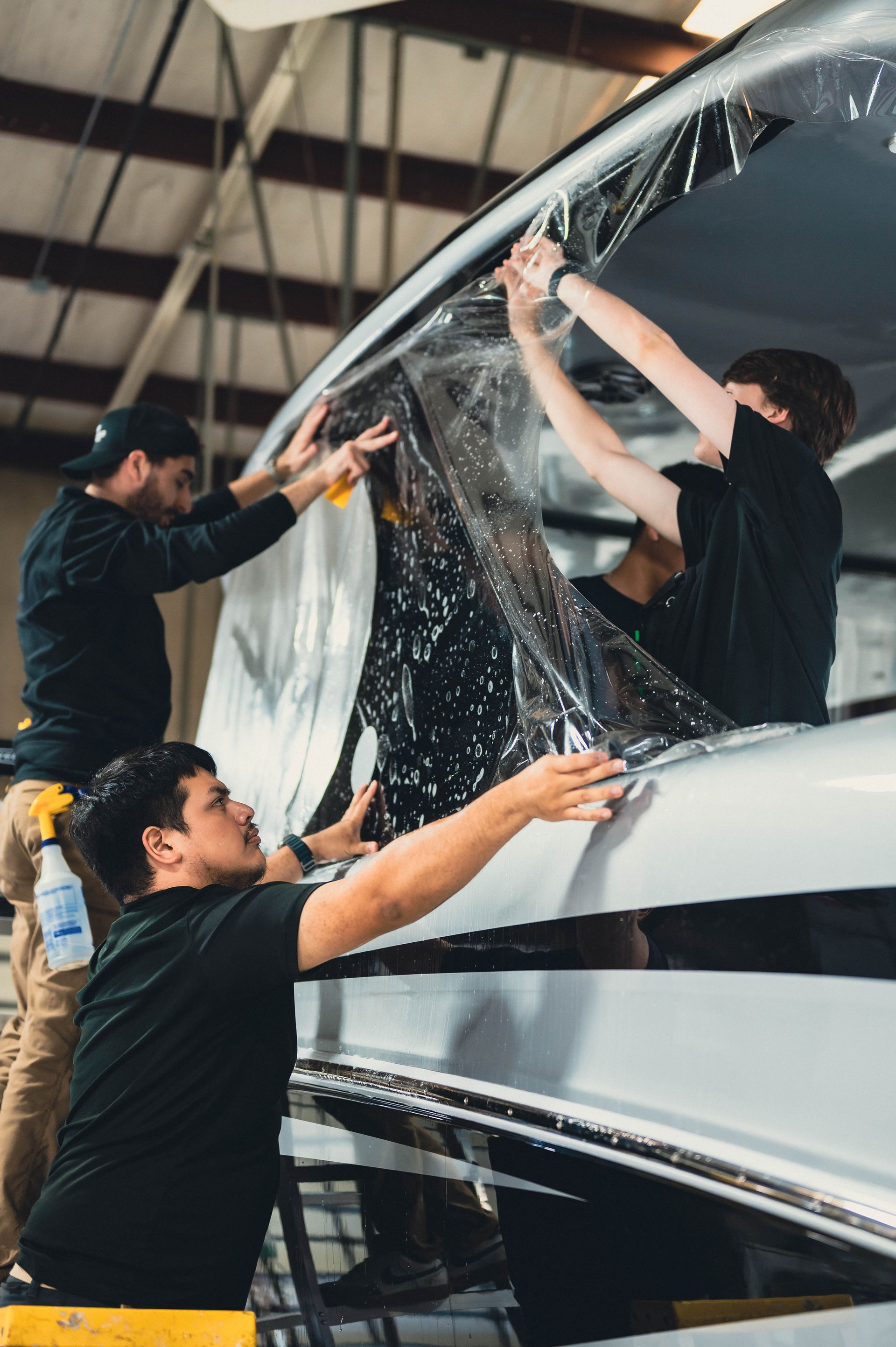
Marine protection film can provide an additional defensive layer in areas where physical contact is predictable.
Fender contact points are an obvious example. Boarding zones, exterior tables, frequently touched finished surfaces, and other abrasion prone areas may also benefit from targeted protection.
The important word is targeted.
Not every surface experiences the same abuse, and not every boat requires protection film in the same locations. A vessel that entertains frequently may have different high contact areas from one primarily used for cruising. Dock configuration can also change where fenders and lines repeatedly meet the hull.
A thoughtful installation starts by identifying where wear actually occurs.
Protection can then be placed where it has a meaningful job to do.
Ceramic Coatings Address the Problems Freshwater Still Leaves Behind
Ceramic coating serves a different purpose.
Where protection film can help defend vulnerable areas against physical contact, ceramic coatings focus more heavily on preserving surfaces and making contamination easier to manage.
That can be particularly valuable on the Great Lakes.
Hydrophobic behavior helps water release from treated surfaces more readily. Routine cleaning can become easier because contamination has a more difficult time clinging stubbornly to the finish. Gloss can be maintained with less repeated correction, while the protected surface gains another line of defense against environmental exposure.
For Lake Michigan boats, that means addressing the problems freshwater does not eliminate.
Water spotting still needs attention. Ultraviolet exposure remains relentless throughout summer. Marina grime still settles onto surfaces. Bird droppings still need to be removed quickly. Seasonal storage still requires thoughtful preparation.
Great Lakes detailing therefore tends to place greater emphasis on ultraviolet exposure, freshwater spotting, and seasonal storage concerns rather than the intensive salt removal routines associated with coastal boating.
That is where ceramic coating fits naturally into a modern freshwater maintenance strategy.
It is not there because Lake Michigan behaves like the ocean.
It is valuable precisely because it does not.
Winter Is Where Great Lakes Ownership Changes the Equation
Great Lakes boat care changes dramatically once summer ends.
Freshwater freezes at a higher temperature than saltwater, which makes winterization and seasonal preparation especially important for boats that spend their lives around Lake Michigan.
Freezing temperatures can affect plumbing, cooling systems, pumps, hoses, and any area where water remains trapped. That makes freeze damage prevention a central part of responsible ownership rather than an optional seasonal task.
Long storage periods create another challenge. Moisture can remain trapped in cabins, compartments, upholstery, and hidden areas. Contamination left on gelcoat or painted surfaces before storage has months to settle in. Metal hardware, vinyl, glass, and other materials can also deteriorate while the boat is sitting unused.
That is why fall preparation should be viewed as preservation.
Clean the vessel thoroughly. Remove contamination before storage. Protect exposed surfaces. Control moisture. Inspect areas that may become vulnerable during cold weather.
Then, when spring returns, recommissioning becomes the next half of the process. Systems are checked, protection is evaluated, and the boat is prepared for another season rather than simply uncovered and launched.
Winter does not end boat care on the Great Lakes.
It changes what boat care needs to accomplish.
A Short Boating Season Makes Preventative Care More Valuable
Chicago boat owners do not have unlimited weekends on the water.
Spring preparation quickly turns into summer boating. Marina schedules fill up. Weather changes unexpectedly. Then fall arrives and winter storage is already approaching.
That compressed season makes preventative care especially valuable.
A boat that enters spring properly inspected, cleaned, and protected is more likely to spend summer being used instead of being corrected. Midseason maintenance helps control spotting, contamination, and surface wear before they become larger problems.
Fall preparation then protects the progress made throughout the summer before the boat goes back into storage.
This matters because losing a beautiful Saturday on Lake Michigan to preventable maintenance feels different when there are only so many Saturdays available.
Preventative care protects the vessel.
It also protects time.
Great Lakes Protection Should Be Built Around Great Lakes Problems
A protection plan should reflect the environment where the boat actually lives.
Great Lakes vessels do not need to copy every maintenance strategy used on coastal saltwater boats. They need protection built around freshwater spotting, ultraviolet exposure, seasonal storage, dock contact, interior moisture, and the rhythm of a Chicago boating season.
For Gelcoat and Painted Surfaces
Focus on professional correction when necessary, followed by protection that reduces future maintenance demands.
Ceramic coating can help improve gloss, resist contamination, and make routine cleaning easier. Regular washing helps prevent mineral deposits and environmental grime from becoming stubborn.
Water spot management should remain part of the maintenance routine, especially on dark hulls and glass. Ultraviolet protection also matters because freshwater does nothing to reduce summer sun exposure.
For High Contact Areas
Physical wear deserves its own strategy.
Marine protection film can be useful around fender contact points, boarding areas, swim platforms, exterior tables, and other locations that experience frequent abrasion.
The goal is not to protect every surface identically.
It is to identify where repeated contact actually occurs and defend those areas before damage becomes obvious.
For Interior Materials
Interior protection should focus on the conditions that develop inside the vessel.
Vinyl and fabric care help preserve appearance and comfort. Glass should remain clear and properly maintained. Moisture control reduces the risk of odors, mold, and mildew.
Regular professional detailing can also help address contamination that routine cleaning leaves behind.
The interior should be maintained with the same intention as the exterior.
For Seasonal Ownership
Great Lakes ownership requires a seasonal plan.
Spring inspections help identify issues before launch. Protection should be evaluated before the busiest part of the season. Summer maintenance keeps contamination and wear under control.
Fall detailing prepares the vessel for storage, while winter moisture management helps protect interiors and enclosed spaces during long periods of inactivity.
A Great Lakes protection strategy works best when it follows the actual ownership calendar.
Professional Detailing Is Still Essential in Freshwater
Freshwater changes maintenance priorities.
It does not eliminate professional maintenance.
Oxidation can still develop. Gelcoat can lose clarity. Water spots can become stubborn. Metals can lose their finish. Interior materials can fade, stain, or hold moisture.
Professional detailing addresses those problems before they become permanent.
That may include oxidation removal, gelcoat correction, water spot removal, metal polishing, deep cleaning, and specialized interior care.
It also includes maintaining the protection already installed.
Ceramic coatings should be inspected and properly maintained. Marine protection film should be checked for condition and wear. Seasonal detailing helps ensure the vessel enters each part of the ownership cycle in stronger condition.
Freshwater may reduce salt related maintenance.
It does not remove the need for preservation.
Easier Maintenance Can Actually Make Neglect More Tempting
There is an irony to freshwater ownership.
Because salt residue is not constantly visible, Great Lakes boats can look easier to maintain than they really are.
That can reduce urgency.
An owner may skip a rinse because the boat does not look dirty. Water spots are ignored because they seem minor. Oxidation develops so slowly that it becomes difficult to notice. Vinyl fades gradually. Metal loses clarity one season at a time.
Contamination bonds little by little.
Then one day the boat no longer looks the way the owner remembers.
Gloss has disappeared. Water spots require correction. Oxidation is obvious. Interior materials look tired. Metal needs more aggressive polishing. What could have been routine maintenance has become restoration.
That is why preventative care matters even more in an environment that feels forgiving.
The lack of salt should make ownership easier.
It should not make neglect easier.
Where Nautishield Fits Into Great Lakes Boat Care
Great Lakes boat care works best when protection is built around the vessel rather than around a generic service menu.
Nautishield approaches marine preservation through professional detailing, gelcoat and surface correction, ceramic coatings, marine protection film, interior care, seasonal preparation, and customized maintenance planning.
The right strategy depends on how the boat is actually used.
- Where is it stored?
- How often does it leave the marina?
- Which surfaces receive the most contact?
- Does the hull struggle with spotting?
- Is the vessel exposed to full summer sun?
- How long does the owner plan to keep it?
Those questions matter because every boat experiences Lake Michigan differently.
The goal is not simply to create an impressive result immediately after detailing.
It is to help the vessel remain easier to maintain, better protected, and visually stronger through season after season of Great Lakes ownership.
The Great Lakes Boat Protection Checklist
A practical Great Lakes maintenance routine should include:
- Inspect exterior surfaces regularly
- Remove bird droppings and contamination quickly
- Manage freshwater spotting before deposits become stubborn
- Protect gelcoat and painted surfaces
- Inspect metals and brightwork
- Protect vulnerable dock contact areas
- Maintain upholstery and interior materials
- Control moisture during storage
- Inspect ceramic coatings
- Inspect marine protection film
- Prepare thoroughly for winter
- Evaluate surfaces during spring commissioning
- Schedule professional detailing throughout the season
The details may vary from one vessel to another.
Consistency is what matters most.
Wrap Up
Freshwater Is Forgiving, Lake Michigan Is Not
Great Lakes ownership comes with real advantages.
Freshwater is generally easier on metals and running gear than saltwater. Owners avoid the constant salt deposits and aggressive corrosion that define much of coastal maintenance.
\
But those advantages should never be mistaken for immunity from wear.
Lake Michigan replaces salt with its own combination of mineral deposits, ultraviolet exposure, contamination, steep conditions, dock contact, freezing temperatures, winter storage, and a compressed seasonal ownership cycle.
The smartest approach is not to maintain a Great Lakes boat as though it spends its life on the ocean.
It is to protect Lake Michigan.
That means managing freshwater spotting before it becomes permanent. Protecting surfaces from summer sun. Defending high contact areas from dockside wear.
Preparing carefully for winter. Maintaining the interior through long storage periods. Keeping protective products performing properly throughout the season.
For Chicago and Lake Michigan boat owners, Nautishield can help create a detailing and marine protection strategy built around the vessel, marina conditions, usage, and long term ownership goals.
Schedule a consultation with Nautishield to build a Great Lakes protection plan designed for the water your boat actually calls home.
Share with your friends


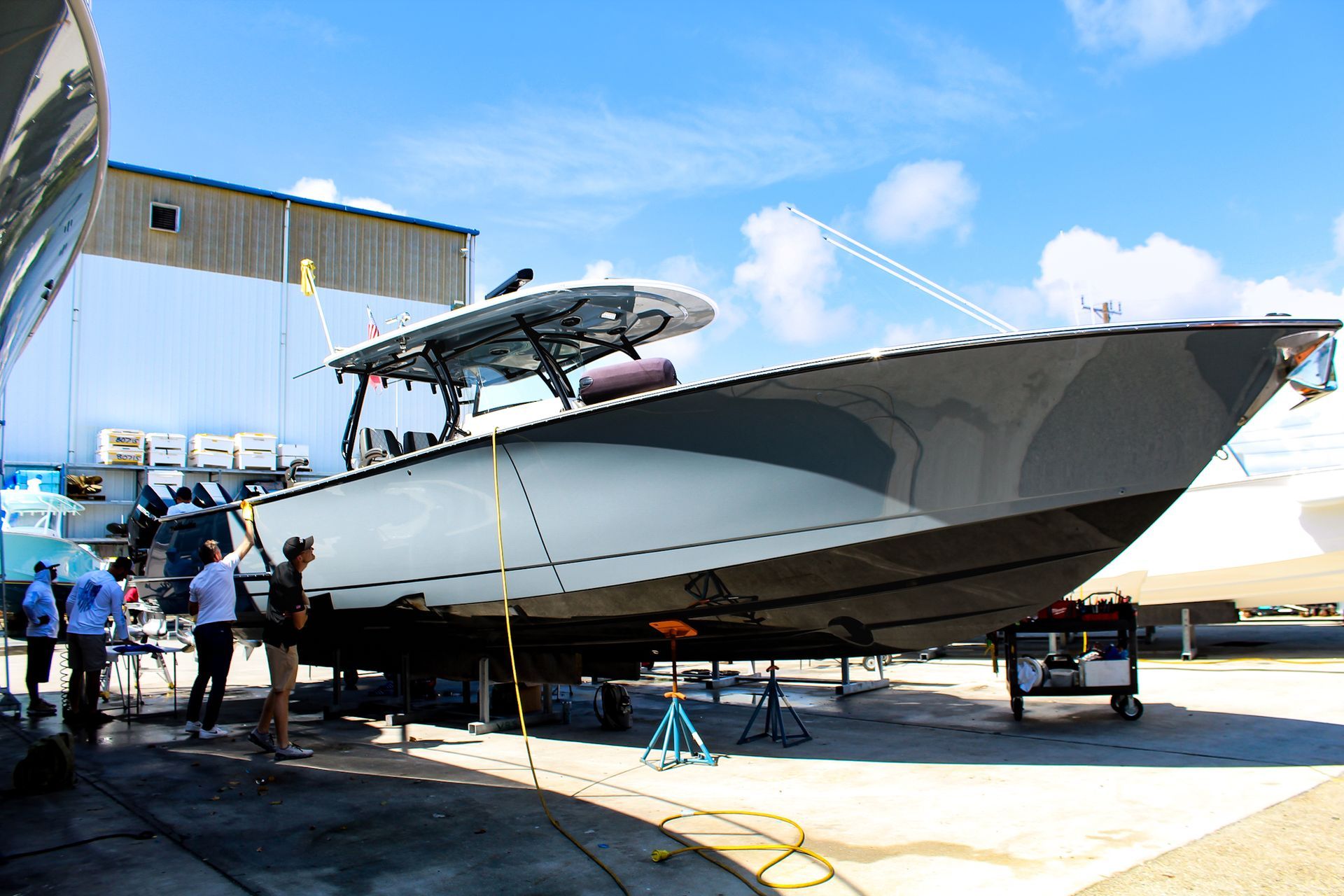

The Marine Protection Experts
Founded with an unquenchable desire for marine perfection, Nautishield is a leader in protection efforts services in the Great Lakes area. When you protect your vessel with Nautishield, you are sure to experience unmatched integrity, customer service excellence, and above all, absolute marine perfection from the inside out. Choose the right marine preotection team - choose Nautishield!
Additional Service Areas
Chicago, IL Glenview, IL Winnetka, IL Lake Forest, IL Chain O' Lakes, IL Waukegan, IL Winthrop Harbor, IL
Lake Geneva, WI Lauderdale Lakes, WI Kenosha, WI Racine, WI
New Buffalo, MI Holland, MI Saugatuck, MI
Michigan City, IN
Naples, FL
NAUTISHIELD MARINE PROTECTION